
Penguins in the Falkland Islands | Species & Viewing Tips
The Falkland Islands are home to five breeding penguin species and nearly one million birds each summer. This guide covers every species, how to identify them, where to see them, and deeper biological facts that make each species unique.
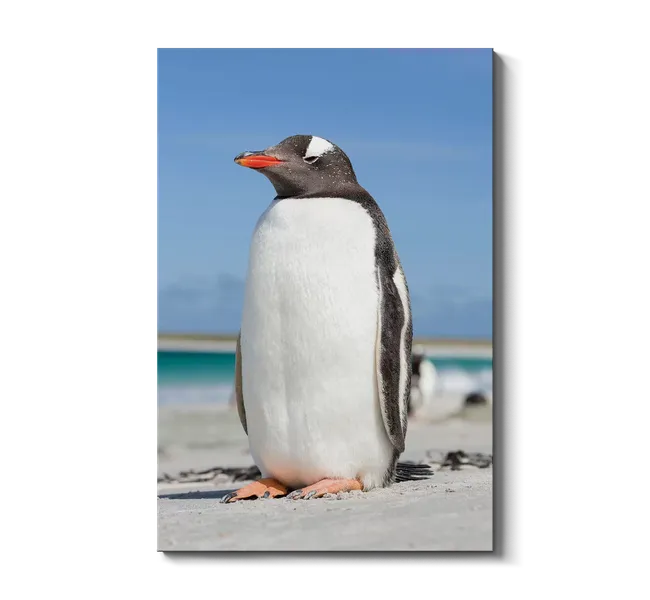
1. Gentoo Penguins (Most Common)
The most widespread species across the islands. Gentoos are energetic, curious, and often seen running between their nests and the sea. They breed in large colonies and are a favourite among visitors due to their approachable nature.
The Falklands host the largest Gentoo penguin population on Earth, with over 140,000 breeding pairs.
Resident all year
Identification: Orange bill, white head stripe, long tail
Where to see: Yorke Bay, Gypsy Cove, Bertha’s Beach, Kelp Point, Volunteer Point
Breeding facts:
Lay two eggs in October
Chicks fledge by January
Diet: Mainly krill, squid, and small fish
Behaviour:
Use well‑worn “penguin highways” between sea and colony
Fast swimmers — up to 36 km/h, one of the fastest penguins
2. King Penguins (Iconic & Majestic)
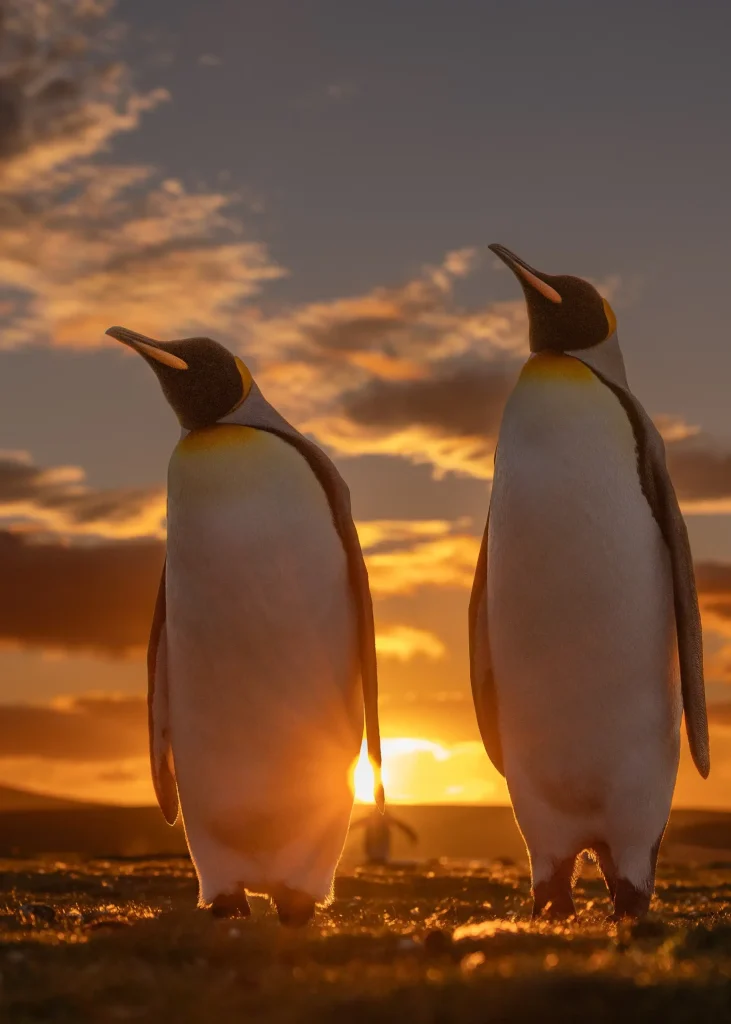
The largest and most striking species, known for their vivid orange markings. The Falklands host one of the world’s most accessible king penguin colonies at Volunteer Point, where visitors can observe adults, chicks, and moulting birds throughout the year.
Volunteer Point is home to the largest king penguin colony in the Falklands, with around 1,500 breeding pairs.
Resident all year
Identification: Tall, orange neck patches
Where to see: Volunteer Point
Breeding facts:
Longest breeding cycle of any penguin — 14–16 months
Eggs are incubated on the parents’ feet
Colonies show eggs, chicks, and adults at the same time
Diet: Lanternfish, squid, and small fish
Behaviour:
Deep divers — often reaching 300 metres
Highly vocal; use trumpeting calls to identify partners
Conservation status: Least Concern, globally stable
3. Magellanic Penguins (Burrow Nesters)
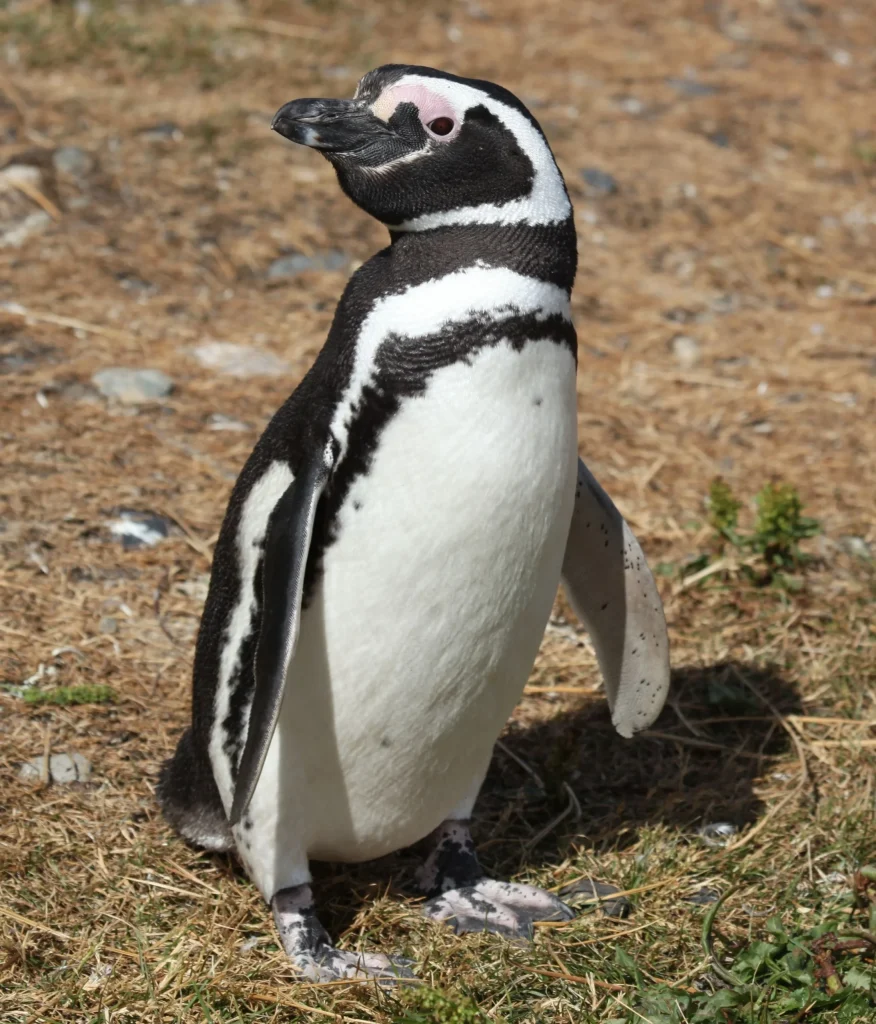
These burrow‑nesting penguins are commonly found near beaches and grassy coastal areas. Their distinctive braying call has earned them the nickname “jackass penguins.” They are frequently spotted at Gypsy Cove and Surf Bay.
Known locally as “jackass penguins” due to their donkey‑like braying call.
Summer breeders
Identification: Black face with white band
Where to see: Gypsy Cove, Yorke Bay, Berthas Beach, Volunteer Point
Breeding facts:
Nest in burrows dug into sand or peat
Lay two eggs in October
Chicks emerge from burrows in December
Diet: Anchovies, sardines, squid
Behaviour:
Nocturnal return to burrows
Colonies can appear empty until heads pop up from burrows
Conservation status: Near threatened due to habitat loss in South America, but Falklands population is healthy
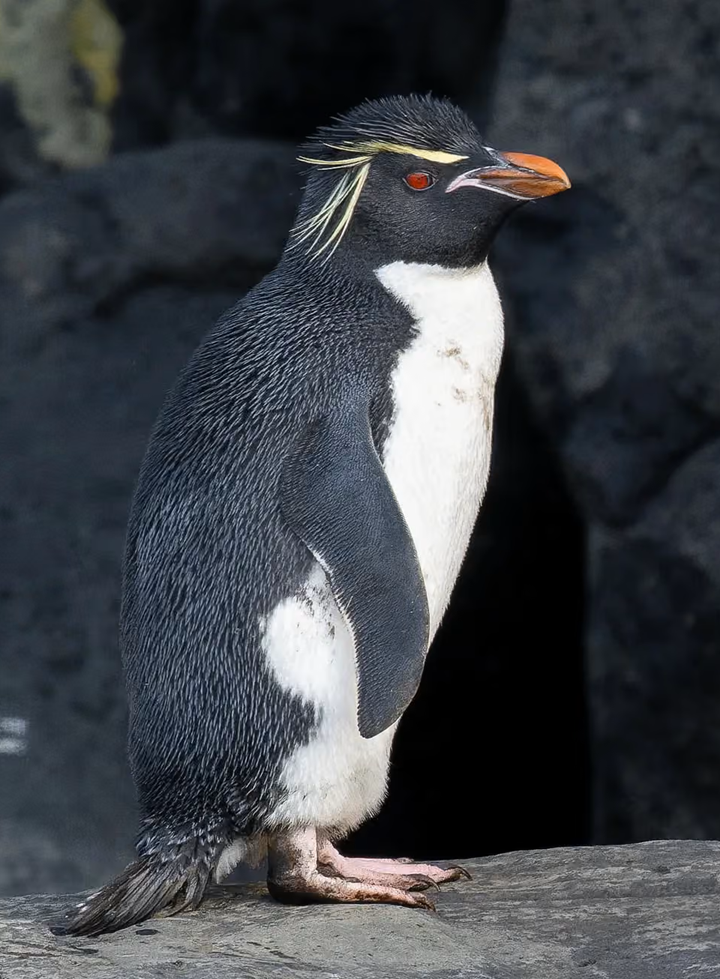
4. Southern Rockhopper Penguins (Cliff Climbers)
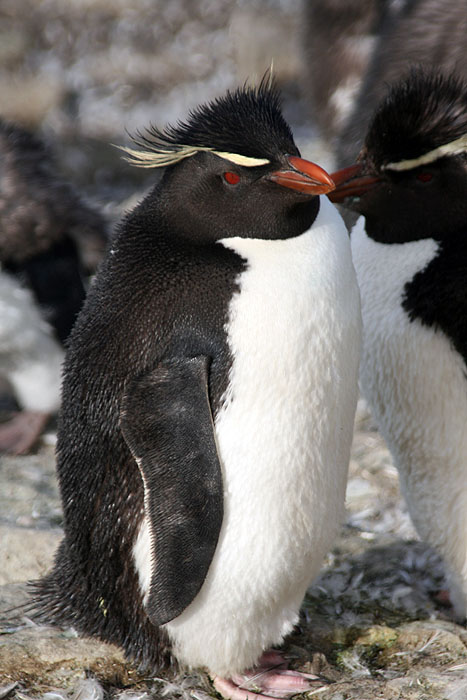
Known for their spiky yellow eyebrows and bold personalities, Rockhoppers prefer steep, rocky cliffs and dramatic shorelines. They are agile climbers and can be seen hopping between boulders with surprising speed.
One of the most charismatic species, famous for their energetic hopping.
Summer breeders
Identification: Red eyes, spiky yellow eyebrows
Where to see: Jason Islands, Pebble Island
Breeding facts:
Nest on steep cliffs
Lay two eggs, but usually only one chick survives
Chicks fledge in February
Diet: Krill, crustaceans, small fish
Behaviour:
“Hopping” motion helps them navigate rocky terrain
Very social and noisy colonies
Conservation status: Vulnerable globally, but Falklands hold one of the world’s largest populations
5. Macaroni Penguins (Rare Visitors)
The rarest of the Falklands’ penguins, Macaroni Penguins are usually found among Rockhopper colonies. Their bright yellow crests make them easy to identify, though sightings are less common.
Each species follows a unique breeding cycle, meaning the viewing experience changes throughout the year.
The least common penguin species in the Falklands.
Summer breeders
Identification: Bright yellow crests
Where to see: Remote western islands
Breeding facts:
Nest among rockhopper colonies
Lay two eggs, but only one chick is raised
Macaroni penguins are krill specialists, but their diet varies depending on season and location:
Krill
Small fish
Squid
They are powerful swimmers and can dive over 100 metres, often making multiple deep dives during a single foraging trip.
Behaviour:
Highly aggressive during breeding season
Known for loud, harsh calls
Conservation status: Vulnerable globally
Start Planning Your Trip
Ready to explore the Falklands? Fill out the form below and our team will create a personalised itinerary for you.
Get in Touch
Phone
00500 52946
Address
Stanley, Falkland Islands.
