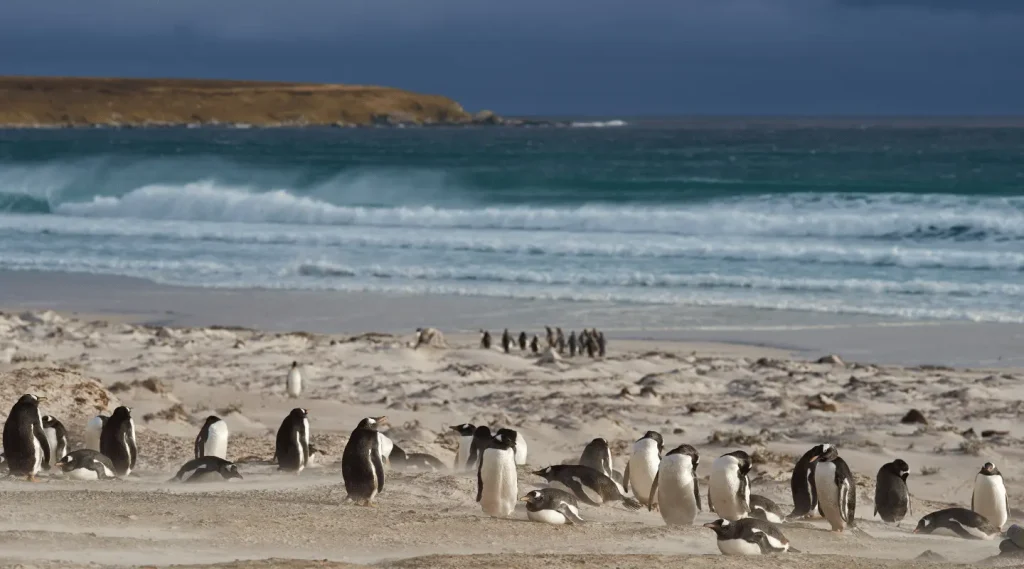
Discover the best time to visit us using our Ultimate Guide: Best Time to Visit the Falkland Islands (Month‑by‑Month). Get expert insights on wildlife, weather and the perfect season for your trip.
The Falkland Islands, a remote and rugged destination in the South Atlantic, are known for their breathtaking wildlife, dramatic landscapes, and rich history. But when is the best time to visit? The answer depends on what you want to see and do. This month-by-month guide will help you choose the best time to plan your trip to the Falklands, whether you’re interested in penguins, hiking, or exploring battlefields.
1. November – early Summer: perfect for wildlife and mild weather
November marks the beginning of summer in the Falklands, making it an ideal time to visit if you’re keen on wildlife watching. The weather starts to warm up, and daylight hours increase. This is the best time to see penguins as many species, including the King Penguin and Magellanic Penguin, begin to nest.
What to Expect:
- Milder temperatures: Around 5–10°C (41–50°F)
- Longer daylight hours: 12–16 hours of daylight
- Penguin colonies: Penguins are returning to the islands and setting up nests.
Recommended Activities:
- Penguin watching at Volunteer Point or Gypsy Cove
- Exploring Stanley, the capital, with fewer tourists
- Beginning of wildlife tours
2. December – peak Summer: ideal for wildlife, flora, and adventure
December is the heart of summer in the Falklands. This month sees an influx of visitors, as the weather is at its best and wildlife is in full swing. Penguins are at the height of their nesting and courtship activities, and you can also spot sea lions, seals, and a wide variety of birds. If you love outdoor activities, December is the time for hiking and exploring the islands.
What to expect:
- Warm temperatures: Around 10–14°C (50–57°F)
- Long days: Up to 18 hours of daylight
- Vibrant wildlife: Penguins, sea lions, and birds are abundant.
Recommended activities:
- Penguin colonies: Best time to witness penguin courtship and nesting
- Hiking in Bertha’s Beach or Cape Pembroke
- Photography of the wildlife and landscapes
3. January – mid-summer: best for wildlife viewing and scenic adventures
January is one of the warmest months in the Falklands, with excellent weather for outdoor activities. Wildlife is still abundant, and this is the perfect time to explore the islands’ remote areas. Birds are still nesting, and penguin chicks are hatching, providing the perfect opportunity for wildlife photography.
What to expect:
- Mild temperatures: Around 12–15°C (54–59°F)
- Long daylight: 16–18 hours of daylight
- Penguin chicks: Penguins are caring for their newly hatched chicks.
Recommended activities:
- Wildlife photography of penguin chicks
- Walking tours through nature reserves
- Cultural and historical tours of Stanley and battle sites
4. February – late summer: wildlife viewing and tranquil eExploration
February is a fantastic month for wildlife enthusiasts and those seeking a quieter time to visit. The penguin chicks are now becoming more independent, and other animals, like seals and seabirds, are abundant. Although the weather is still mild, the crowds start to thin, making it an excellent time for those who prefer a more tranquil visit.
What to expect:
- Temperatures: 10–14°C (50–57°F)
- Decreasing daylight: About 14–16 hours of daylight
- Penguin chicks: Penguins are teaching their chicks to forage.
Recommended activities:
- Penguin watching at quieter colonies
- Outdoor activities like hiking and photography
- Cultural tours to learn more about the Falklands War and local history
5. March – early autumn: less crowded and creat for scenic tours
March marks the beginning of autumn in the Falklands. While the weather is still mild, there’s a noticeable decrease in the number of visitors. This is a great time for those who enjoy exploring the islands without the crowds. The wildlife is still active, with penguin colonies still thriving, and the fall foliage adds a new layer of beauty to the islands.
What to expect:
- Cooler temperatures: Around 8–12°C (46–54°F)
- Shorter days: 12–14 hours of daylight
- Fewer tourists: Enjoy the Falklands with less crowding.
Recommended activities:
- Wildlife viewing with less crowded areas
- Exploring historic battle sites in peace
- Hiking and photography with stunning autumn scenery
6. April – late autumn: ideal for history buffs and quiet exploration
As the weather cools further, April offers a quieter experience for those interested in history and serene landscapes. Penguin colonies are beginning to disperse, and many other birds are migrating. This is an excellent month for history enthusiasts to visit the Falklands’ battlefields and memorials.
What to expect:
- Cool temperatures: Around 6–10°C (43–50°F)
- Shorter days: 10–12 hours of daylight
- Migrating birds: Great for birdwatching.
Recommended activities:
- Falklands war history tours: Visit battle sites and memorials
- Birdwatching, especially seabirds
- Quiet hikes through coastal areas
7. May – early winter: peaceful yet cold
May brings the start of winter in the Falklands, and temperatures drop further. Wildlife is still visible, but many species begin migrating away. For those seeking a peaceful and solitary experience, May offers fewer crowds, and the islands’ rugged beauty is enhanced by the colder weather.
What to expect:
- Cold temperatures: Around 4–7°C (39–45°F)
- Short days: 8–10 hours of daylight
- Quieter islands: Ideal for those who want solitude.
Recommended activities:
- Photography of the stark, winter landscapes
- Quiet walks and exploration
- Winter wildlife viewing for those interested in seals and sea birds
8. June to August – winter: cold but quiet
The winter months of June, July, and August are for the adventurous traveler. The Falklands are at their quietest, with minimal tourism, and the wildlife is sparse. However, this is also when you can experience the remote beauty of the islands with snow-covered landscapes, wind-swept cliffs, and few other tourists.
What to expect:
- Cold temperatures: Around 0–4°C (32–39°F)
- Shortest days: 6–8 hours of daylight
- Snow and wind: Expect rugged, cold conditions.
Recommended activities:
- Photography of winter landscapes
- Winter wildlife tours for seals and migratory birds
- Cultural exploration with fewer crowds
Conclusion
The best time to visit the Falkland Islands depends on what you want to experience. For wildlife enthusiasts, November to March is the prime season, while those seeking a quieter, more peaceful experience may prefer April to August. Whichever time you choose, the Falklands offer unique experiences throughout the year. Just be sure to pack appropriately for the weather, and you’ll have an unforgettable adventure on this remote and beautiful archipelago.